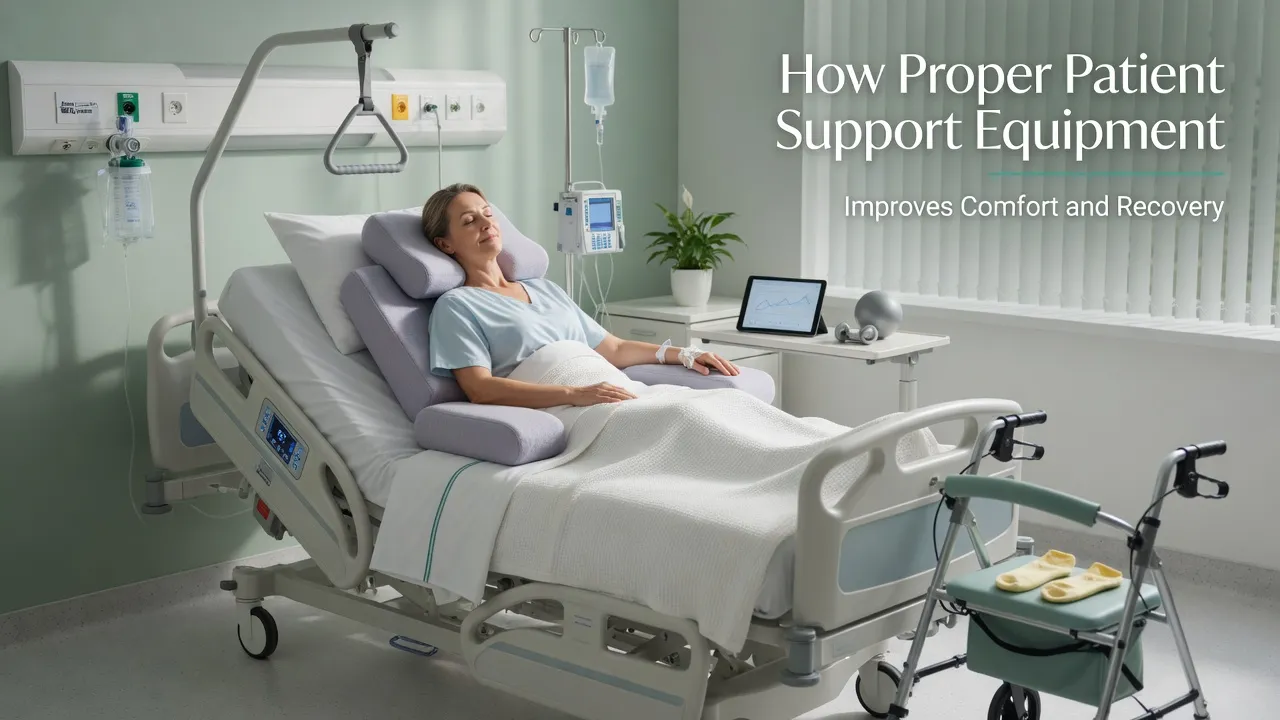
How Proper Patient Support Equipment Improves Comfort and Recovery
Patient comfort and safe recovery are among the most important priorities in healthcare environments. Whether a patient is recovering from surgery, illness, injury, or long-term mobility challenges, proper patient support equipment plays a major role in improving overall health outcomes.
Healthcare facilities, nursing homes, rehabilitation centers, and home care providers rely heavily on equipment designed to enhance mobility, reduce discomfort, and support patient safety. Devices such as hospital beds and patient hoists help patients recover more comfortably while also reducing physical strain on caregivers.
In this guide, you will learn how proper patient support equipment improves comfort and recovery, why it matters in healthcare settings, and how the right support devices contribute to better patient care.
For more healthcare and wellness guides, visit Arabian Aura Central
What Is Patient Support Equipment?
Patient support equipment refers to medical and assistive devices designed to improve patient comfort, mobility, positioning, and safety during treatment or recovery.
These devices are commonly used in:
- Hospitals
- Rehabilitation centers
- Nursing homes
- Assisted living facilities
- Home healthcare environments
The primary goal of patient support equipment is to make recovery safer, easier, and more comfortable for both patients and caregivers.
Why Proper Patient Support Equipment Matters
Patients recovering from medical conditions often experience:
- Limited mobility
- Physical pain
- Muscle weakness
- Fatigue
- Difficulty changing positions
Without proper support equipment, patients may face additional discomfort and health complications.
Key Benefits of Patient Support Equipment
| Benefit | Why It Matters |
|---|---|
| Improved Comfort | Reduces physical strain and discomfort |
| Better Mobility | Assists safe movement and transfers |
| Faster Recovery | Supports healing and circulation |
| Injury Prevention | Reduces falls and caregiver injuries |
| Pressure Relief | Helps prevent pressure ulcers |
| Enhanced Safety | Creates a safer care environment |
Proper equipment improves both physical and emotional well-being during recovery.
Hospital Beds: Essential for Patient Comfort
A hospital bed is one of the most important pieces of patient support equipment used in healthcare settings.
Unlike standard beds, hospital beds are specifically designed to provide adjustable positioning, improved support, and easier accessibility for patients with limited mobility.
How Hospital Beds Improve Recovery
Hospital beds help patients maintain more comfortable positions throughout the day and night.
Features of Modern Hospital Beds
| Feature | Benefit |
|---|---|
| Adjustable Head Position | Improves breathing and comfort |
| Adjustable Leg Support | Enhances circulation |
| Height Adjustment | Easier patient transfers |
| Side Rails | Improves safety and fall prevention |
| Pressure Relief Support | Reduces risk of bed sores |
These adjustments allow healthcare providers to customize positioning based on patient needs.
Preventing Pressure Ulcers and Complications
Patients who remain in bed for long periods are at higher risk of developing pressure ulcers, also known as bed sores.
Proper hospital bed positioning helps:
- Reduce pressure on sensitive areas
- Improve blood circulation
- Lower pain levels
- Support muscle relaxation
- Prevent long-term skin complications
This is especially important for elderly patients and individuals with severe mobility limitations.
Patient Hoists: Safe and Effective Mobility Support
For patients with significant mobility challenges, moving safely between locations can become difficult without assistance.
A patient hoist is a specialized lifting device used to safely transfer patients from one place to another.
Patient hoists are commonly used to move patients:
- From bed to wheelchair
- From wheelchair to bathroom
- Between rooms
- Into rehabilitation equipment
Benefits of Patient Hoists
Patient hoists improve safety for both patients and caregivers.
Advantages of Using Patient Hoists
| Advantage | Explanation |
|---|---|
| Safe Patient Transfers | Reduces fall risks |
| Less Physical Strain | Protects caregivers from injury |
| Improved Comfort | Gentle movement during transfers |
| Increased Independence | Helps patients feel more secure |
| Better Dignity | Maintains patient confidence |
Manual lifting can cause serious injuries for caregivers, especially in long-term care environments. Hoists help minimize these risks significantly.

Reducing Caregiver Injuries
Healthcare workers and family caregivers often experience physical strain when manually lifting patients.
Using patient hoists helps reduce:
- Back injuries
- Muscle strain
- Joint stress
- Workplace accidents
This creates a safer working environment while allowing caregivers to provide more efficient support.
Combining Hospital Beds and Patient Hoists
Hospital beds and patient hoists work best when used together.
The combination provides:
- Comfortable patient positioning
- Safer mobility assistance
- Easier patient transfers
- Reduced physical stress
- Better overall recovery conditions
This integrated support system improves the quality of care for patients with limited movement.
Benefits for Home Care Patients
Many families now use patient support equipment at home for elderly or recovering family members.
Home Care Advantages
| Benefit | Impact |
|---|---|
| Increased Comfort | Better daily living experience |
| Safer Transfers | Reduced household accidents |
| Easier Caregiving | Less physical burden on family |
| Improved Recovery | More supportive environment |
Home healthcare equipment allows patients to recover in familiar surroundings while maintaining safety and dignity.
Supporting Emotional Well-Being During Recovery
Comfort during recovery is not only physical. Emotional well-being also plays a major role in healing.
Patients who feel safe, supported, and comfortable often experience:
- Reduced anxiety
- Better sleep quality
- Improved confidence
- Lower stress levels
- More positive recovery experiences
Proper patient support equipment contributes to these outcomes by reducing discomfort and improving daily routines.
Choosing the Right Patient Support Equipment
Selecting the appropriate equipment depends on:
- Patient mobility level
- Medical condition
- Recovery duration
- Caregiver availability
- Home or facility environment
Healthcare professionals usually recommend specific equipment based on individual patient needs.
Common Types of Patient Support Equipment
| Equipment Type | Primary Purpose |
|---|---|
| Hospital Beds | Adjustable comfort and positioning |
| Patient Hoists | Safe lifting and transfers |
| Wheelchairs | Mobility assistance |
| Pressure Relief Mattresses | Prevent bed sores |
| Walking Aids | Improve movement support |
Each device plays a specific role in improving patient care and recovery.
Important Factors to Consider
Before choosing patient support equipment, consider:
- Safety features
- Ease of use
- Weight capacity
- Patient comfort
- Maintenance requirements
- Caregiver accessibility
High-quality equipment improves both safety and long-term reliability.
Frequently Asked Questions
What is patient support equipment?
Patient support equipment includes medical devices designed to improve patient comfort, safety, mobility, and recovery.
Why are hospital beds important?
Hospital beds provide adjustable support, improve comfort, and help prevent complications such as pressure ulcers.
What does a patient hoist do?
A patient hoist safely lifts and transfers patients between locations while reducing physical strain on caregivers.
Can patient support equipment be used at home?
Yes. Many families use hospital beds and patient hoists in home healthcare settings.
Does patient support equipment improve recovery?
Yes. Proper equipment enhances comfort, reduces injury risks, and supports faster recovery.
Final Thoughts
Proper patient support equipment plays a critical role in improving comfort, safety, and recovery outcomes for patients in hospitals, care facilities, and home environments.
Devices such as hospital beds and patient hoists help reduce physical stress, support mobility, prevent complications, and improve the overall quality of care. They also protect caregivers from unnecessary strain while allowing patients to recover with dignity and comfort.
Investing in the right patient support equipment benefits both patients and healthcare providers by creating a safer and more supportive recovery environment.
For more healthcare and wellness articles, visit Arabian Aura Central